Mixed Media Project
>>>Main Page我們一家人 Our Family
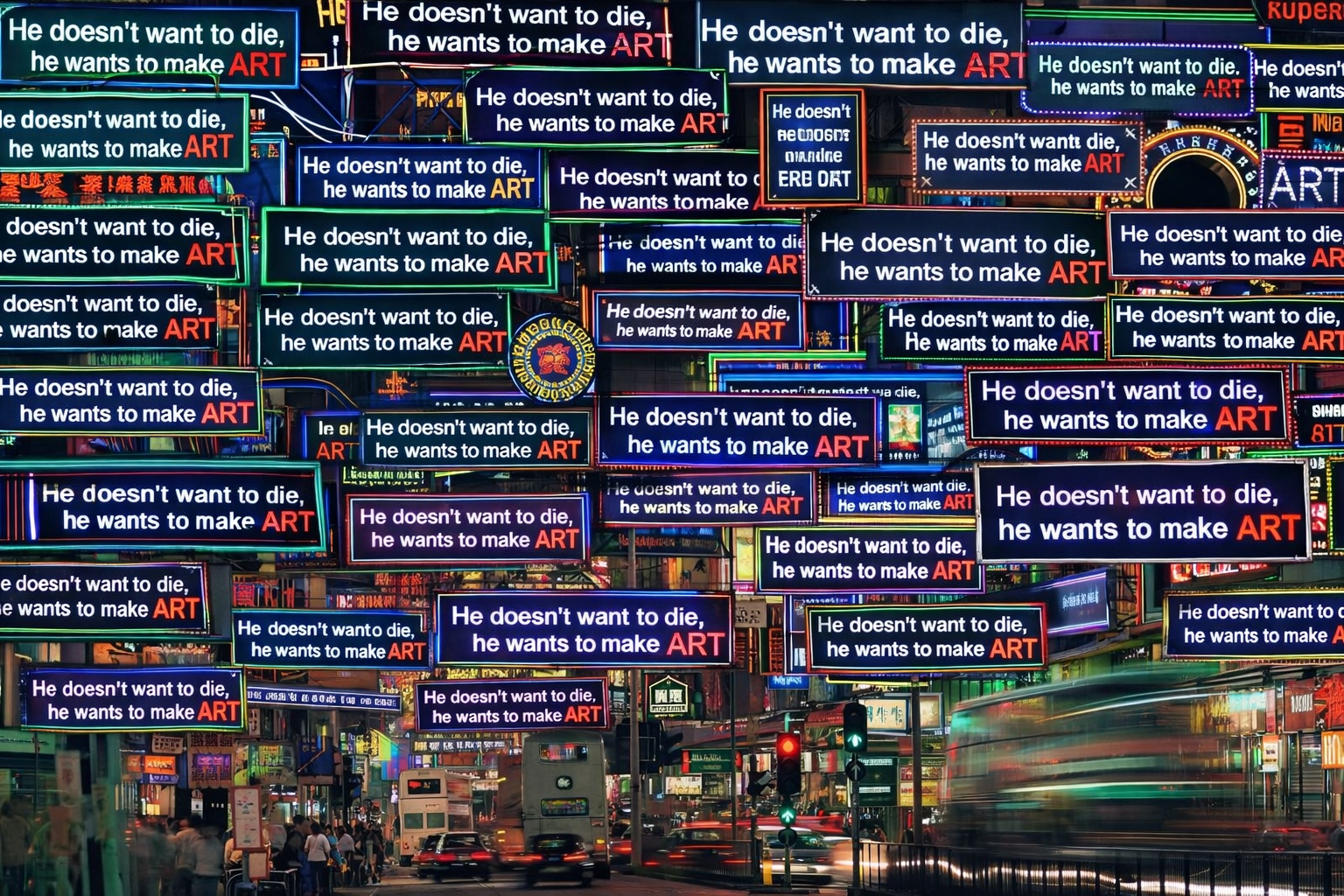
- Year: On going
- Medium:
Neon Art;
Multi-channel video, colour;
Sound, with a photographic installation;
Ready-made, photographic installation;
Chinese Seal, installation;
Chinese Calligraphy,installation;
- 《阿拉一家門》是一部由四個部分組成的家族史藝術項目,分別講述了曹家四代人——曹惠民、曹振南、曹誌雄與曹夢芹的生命故事。作品通過文獻、影像、裝置與口述史等多種媒介,將個人的命運沉浮與百年來的時代變遷緊密交織。
《尋找曹惠民》:以晚清郵政官員之子曹惠民(生於1898年)爲線索。他在1951年孤身赴港後最終音訊全無,而其後代卻在70年代因他“叛逃颱灣”的傳聞而遭到審查與牽連。該部分包含了《申報誌喜》文獻燈箱與《最後的消息》口述史錄音,藝術家更結合在颱灣駐地期間對民間信仰與法船送靈活動的觀察,創作了《颱灣諸神》、《曹惠民像龕》及《法船會》,重構了曹夢芹-曹惠民的精神圖像空間。
《曹振南的沉默震耳欲聾》:聚焦曹惠民的長子曹振南(生於1926年)。因受曆次運動的驚嚇,他一生極度沉默寡言,幾乎隻在每晚睡前拍打枕頭時才髮出聲響。該部分呈現了攝影裝置作品《曹振南像》。
《六〇五》:圍繞曹振南次子曹誌雄(生於1948年)的三線建設經曆展開。1969年,他從上海被分配至位於四川的國營樂山造紙廠(代號605),直至2002年才得以返滬。此部分展出《曹誌雄》文獻燈箱、《六〇五生活區 – 2025》雙頻影像,以及探討對於彝族“邊疆”木材資源調配的詩歌裝置《我那騎馬的父親,從此暈車在林路的儘頭》,對於東部人力調配的篆刻裝置作品與《三十個上海人》。
《他不想死也想做藝術》:講述曹誌雄獨子、現爲藝術家的曹夢芹(生於1980年)的當代境遇。他出生於605廠,後憑藉三線建設相關政策落戶上海。該部分通過語料庫數字交互裝置《她不想死也想去巴黎》、現成品《他不想死也想做作品》及文字裝置《我不想死也想...》,將社交媒體“巴黎廁”中年輕人深陷超前消費欲望的兩難處境,與藝術家在現實經費與精神內耗博弈中的創作欲望相類比,剖析了其從藝二十年來的內心縮影。
Our Family is a four-part family history art project that chronicles the life stories of four generations of the Cao family: Cao Huimin, Cao Zhennan, Cao Zhixiong, and Cao Mengqin. Through a diverse range of mediums—including archives, stills, installations, and oral history—the work closely intertwines the vicissitudes of individual destinies with the historical transformations of the past century.
Searching for Cao Huimin: Centered on Cao Huimin (b. 1898), the son of a late-Qing Dynasty postal official. After traveling alone to Hong Kong in 1951, he eventually vanished without a trace, yet his descendants faced interrogation and political implication in the 1970s due to rumors that he had "defected to Taiwan." This section features the archival lightbox Shun Pao Wedding Announcement and the oral history audio The Last Message. Combining observations of folk beliefs and the Dharma boat spirit-sending rituals during an artist residency in Taiwan, the artist also created Gods of Taiwan, Shrine for Cao Huimin, and Dharma Boat Gathering, reconstructing a spiritual and iconographic spatial connection between Cao Mengqin and Cao Huimin.
Cao Zhennan's Deafening Silence: Focuses on Cao Huimin's eldest son, Cao Zhennan (b. 1926). Traumatized by successive political movements, he remained profoundly silent throughout his life, making sounds almost exclusively when patting his pillow before sleep each night. This chapter presents the photographic installation Portrait of Cao Zhennan.
605: Revolves around the Third Front Construction experiences of Cao Zhennan's second son, Cao Zhixiong (b. 1948). In 1969, he was reassigned from Shanghai to the state-owned Leshan Paper Mill (Code 605) in Sichuan, only managing to return to Shanghai in 2002. This section includes the archival lightbox Cao Zhixiong, the dual-channel video 605 Living Quarters – 2025, and poetic installation— My Horse-Riding Father, Carsick at the End of the Forest Road Ever Since and seal-carving installationThirty Shanghainese. These installations explore the planned economy's allocation of "frontier" timber resources and eastern human labor, while reconstructing the memory of the grueling train journeys into Sichuan.
He Doesn't Want to Die, But He Wants to Make Art: Narrates the contemporary circumstances of Cao Zhixiong's only son, Cao Mengqin (b. 1980), who is now an artist. Born in Factory 605, he eventually secured a Shanghai household registration (hukou) through policies related to the Third Front Construction. Through the corpus-based digital interactive installation She Doesn't Want to Die, But She Wants to Go to Paris, the readymade He Doesn't Want to Die, But He Wants to Make Artworks, and the text installation I Don't Want to Die, But I Want to..., this section draws a parallel between the dilemma of young people trapped in hyper-consumption desires on social media (the anonymous confession account "Paris Toilet") and the artist's own creative desires wrestling with practical funding limits and mental exhaustion. It serves as an introspective microcosm of his twenty-year artistic career.
盲人摸像 Blind Man and the Images
- Year: 2024
- Medium:
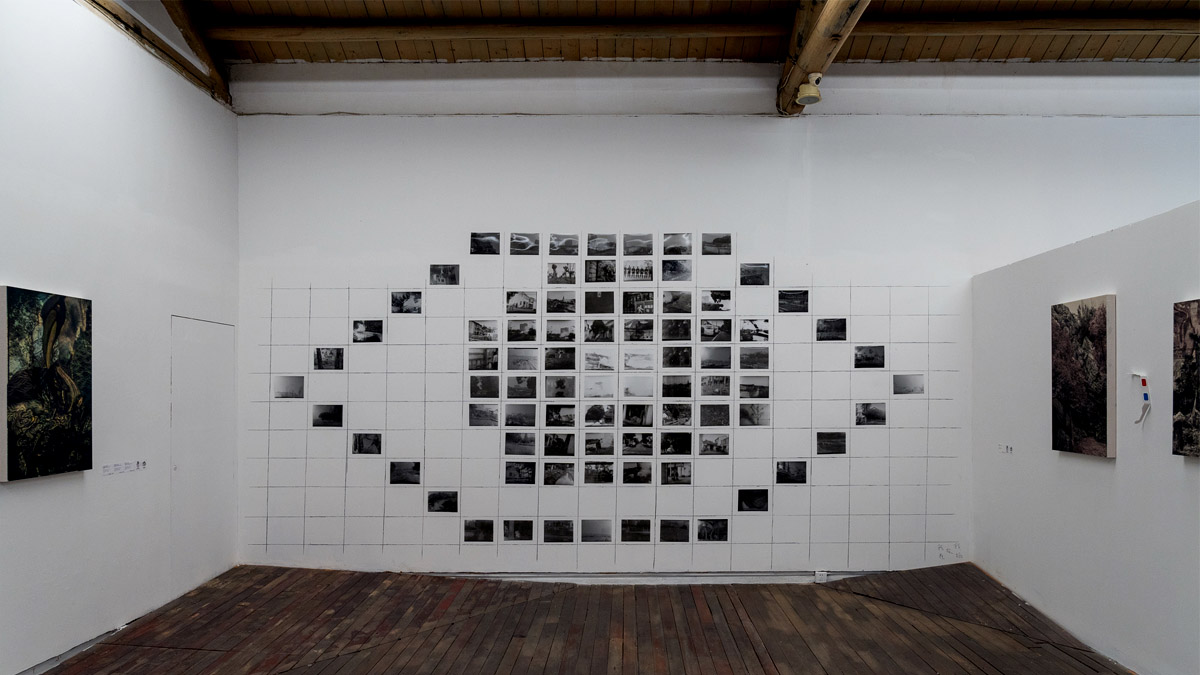
Photo wall;
Single channel anaglyphic photomontage video, black&white;
2 Photographs,colour inkjet print. - Location: Shanghai, China.
- Exhibition(s):OFOTO&ANART Gallery, M50, Shanghai, China, 2024.
A story told from a first-person perspective, originating from an event where a photographer is visually impaired due to an accident caused by the alcohol intoxication during the Shanghai Lockdown back to Covid-19 pandemic 2022. He experiences two worlds after the unfortunate incident — the physical world where he relies on his hearing and blurred vision to take photos, and the mental world where he engages in photography by the memories of a collection of his past work. In this work, the artist continues to explore the symbolism of the past, while responding to snapshot photography.
耕樂堂 Geng-le Hall - Room-size Camera Obscura
- Year: 2017
- Location: Gengle Hall, Suzhou, China.
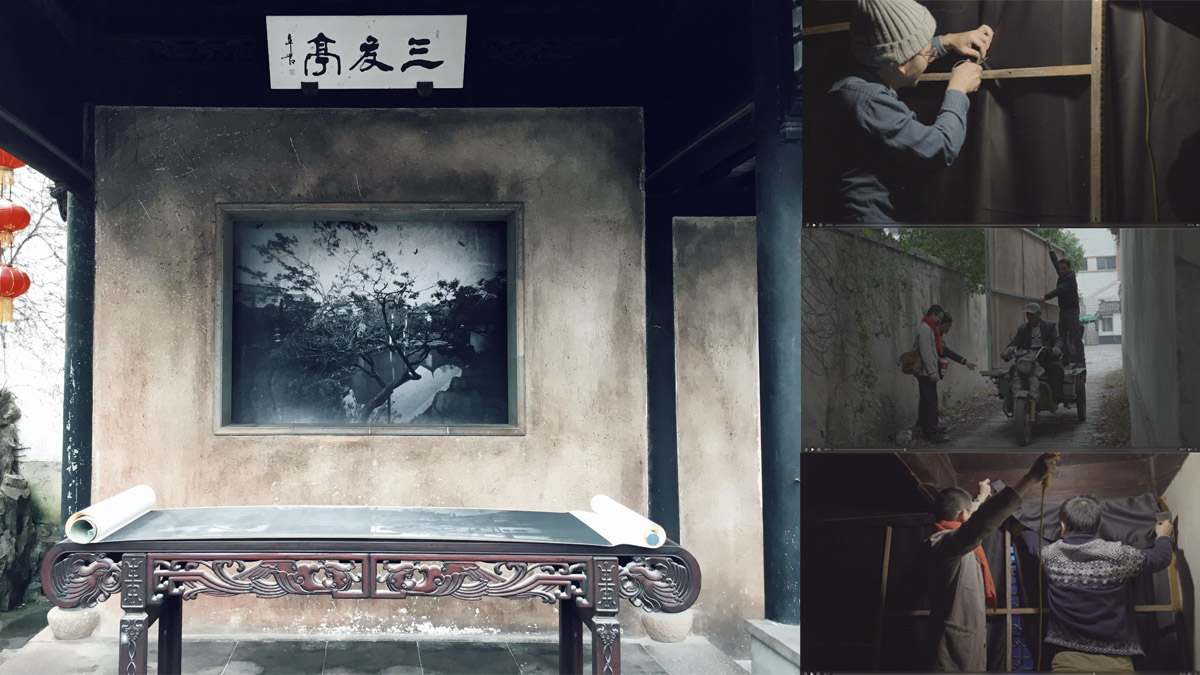
Artist(with Mr Fang Xiaohe) converted a historical building at Gengle Hall, Suzhou, into a room-sized camera obscura. The resulting images were displayed in one of the garden's pavilions, accompanied by a Chinese literati salon ritual.
為劇本而作 For Screenplay
- Year:2009
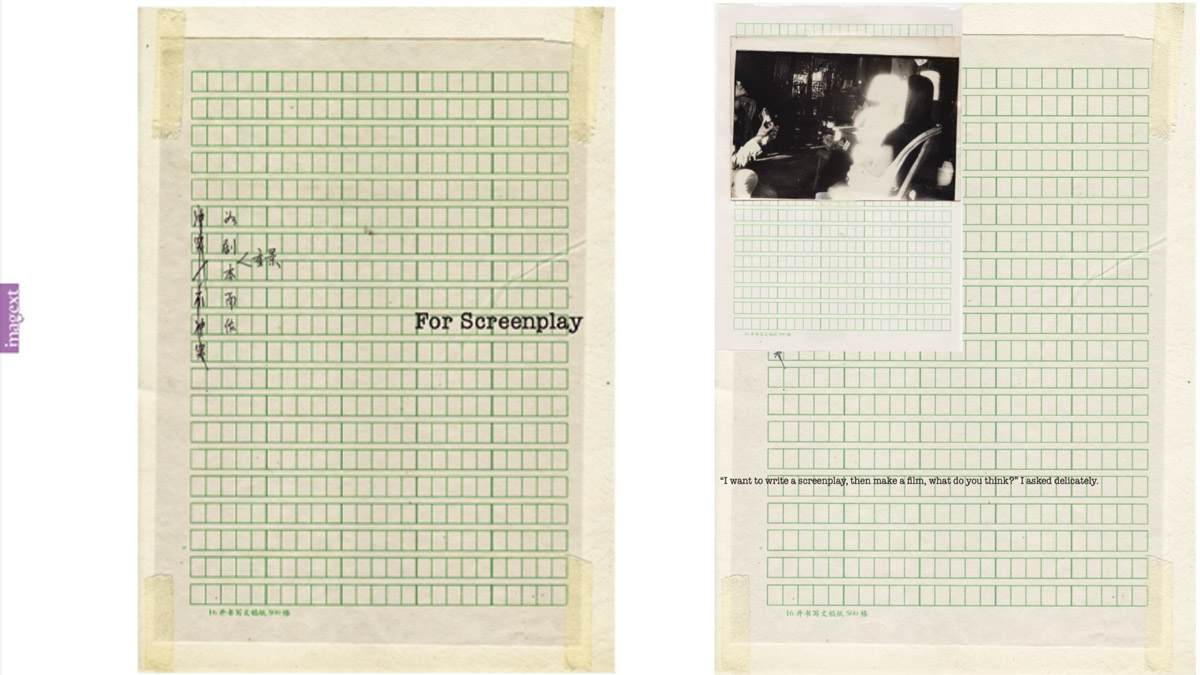
- Medium:Publication
- Location:New York, U.S.
A photo fiction told a story of a filmmaker visiting friends and places for the inspiration.
相對陰影 Relative Shadow
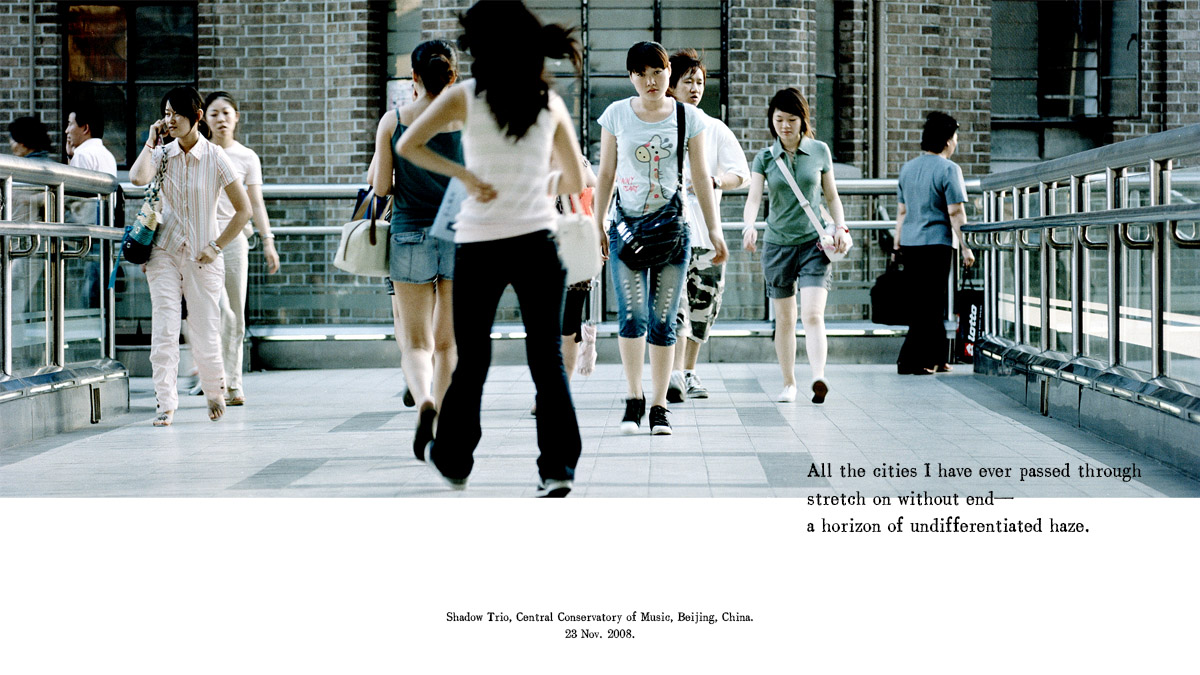
- Year:2008
- Medium:Live Perfomance
- Location:Concert Hall of Central Conservatory of Music, Central Conservatory of Music, Beijing 23 Nov. 2008.
Shadow Trio is a music, visual, and poetry trio founded in Beijing,2008 by pianist Zhang Jialin, cellist Song Zhao, and artists Cao Mengqin and Zhang Yan.